Case Study: Specialist Dry Ice Blasting Following a Major Commercial Fire
When a major fire affects a commercial property, the damage often extends far beyond the immediate area of the blaze. Smoke and soot can spread throughout a building, contaminating structural surfaces and creating significant restoration challenges.
Recently, Independent Restoration was appointed to undertake specialist fire damage cleaning at a large industrial premises following a significant fire.
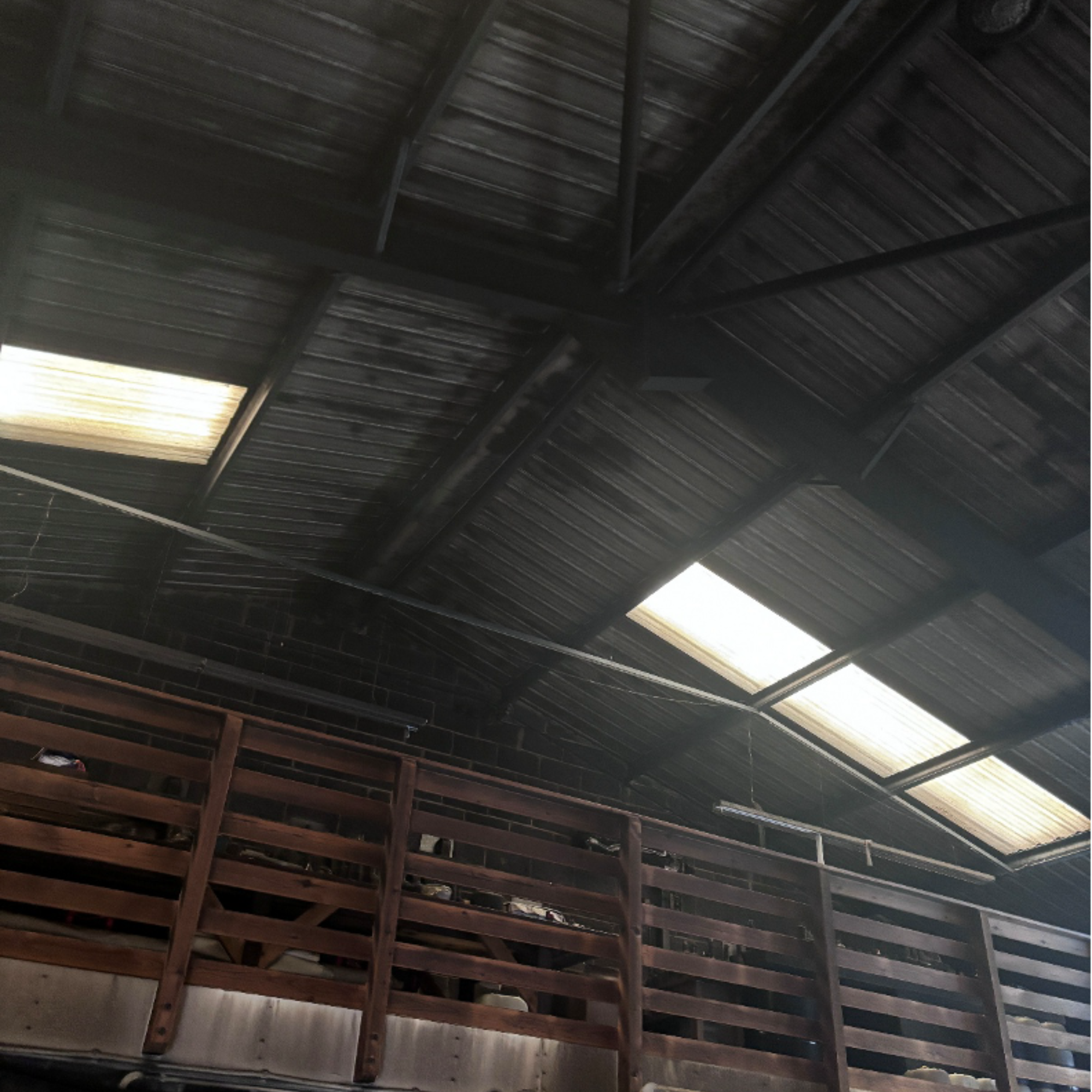
The incident had resulted in extensive smoke and soot contamination throughout the main warehouse, affecting everything from masonry walls to structural steelwork and roof cladding.
With large areas of the building impacted, a specialist restoration approach was required to remove contamination while preserving as much of the existing structure as possible.
The Challenge
The property consisted of a substantial industrial warehouse with adjoining office facilities. Following a fire caused by an equipment fault, heavy soot and smoke deposits had spread across both the upper and lower warehouse areas.
The contamination affected multiple surfaces, including:
Blockwork and masonry walls
Structural steel framing
Steel wall panels
Roof framing members
Internal and external cladding
The scale of the building presented an additional challenge. With high ceilings and extensive overhead steelwork, specialist access equipment was required to safely reach and clean the affected areas.
The priority was to remove the widespread contamination and maximise the potential for restoring existing building materials, rather than relying on unnecessary replacement.
Our Response
Following an initial site survey, Independent Restoration identified dry ice blasting as a suitable method for tackling the extensive soot and smoke contamination.
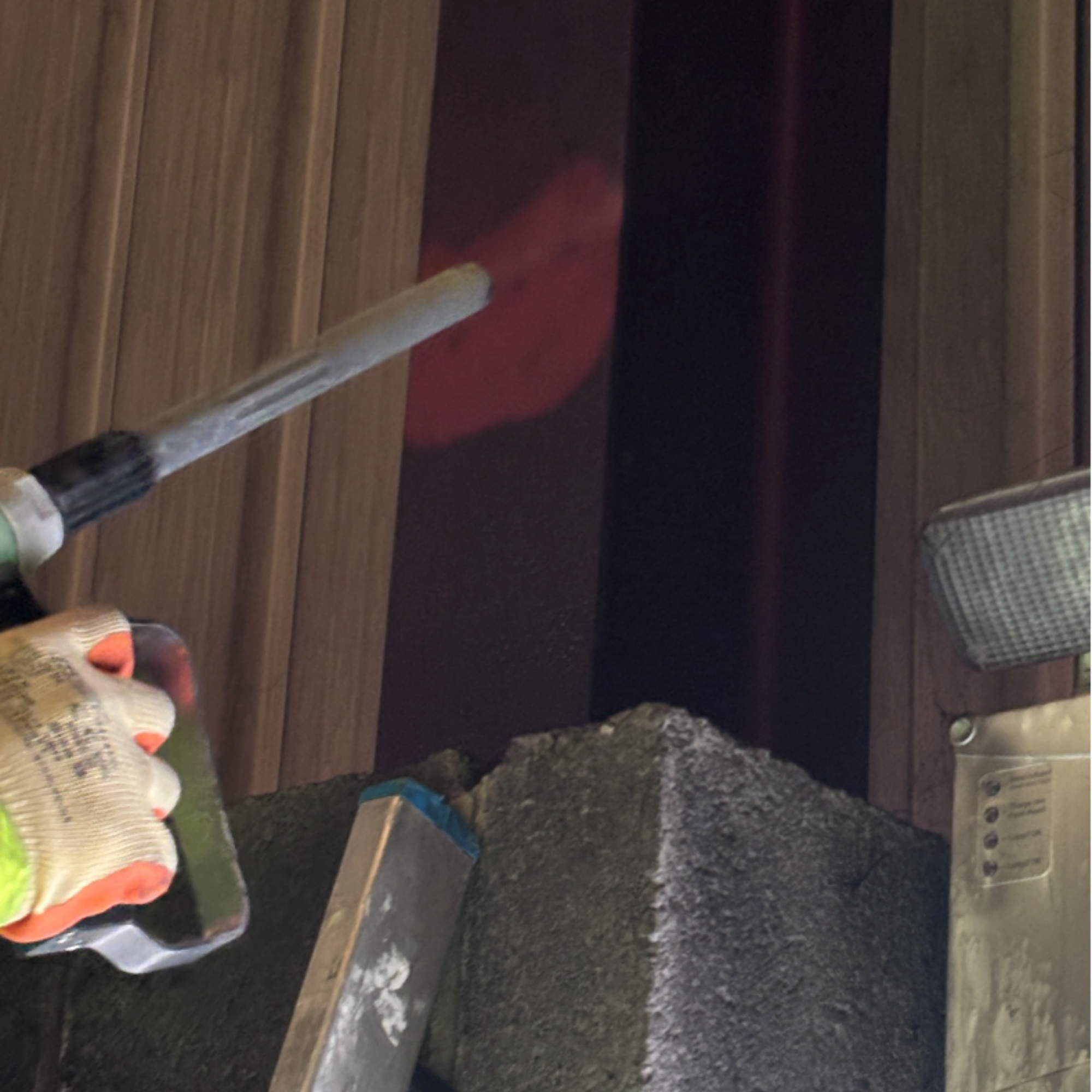
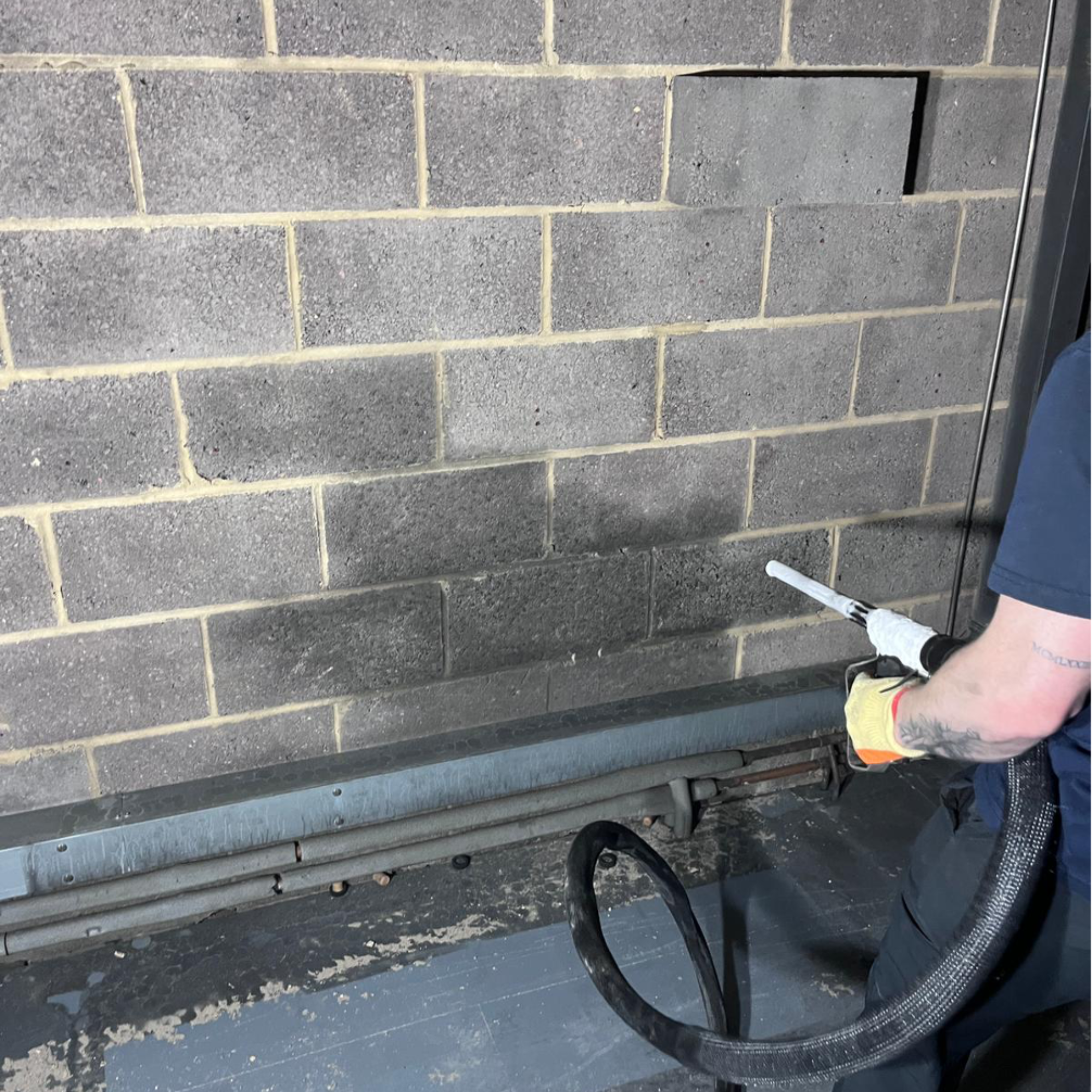
This specialist cleaning technique uses a combination of high-velocity impact, thermal shock and rapid sublimation to dislodge contaminants from affected surfaces.
Unlike traditional abrasive blasting methods, dry ice blasting uses solid carbon dioxide pellets that turn directly into gas on impact, leaving no additional blasting media behind.
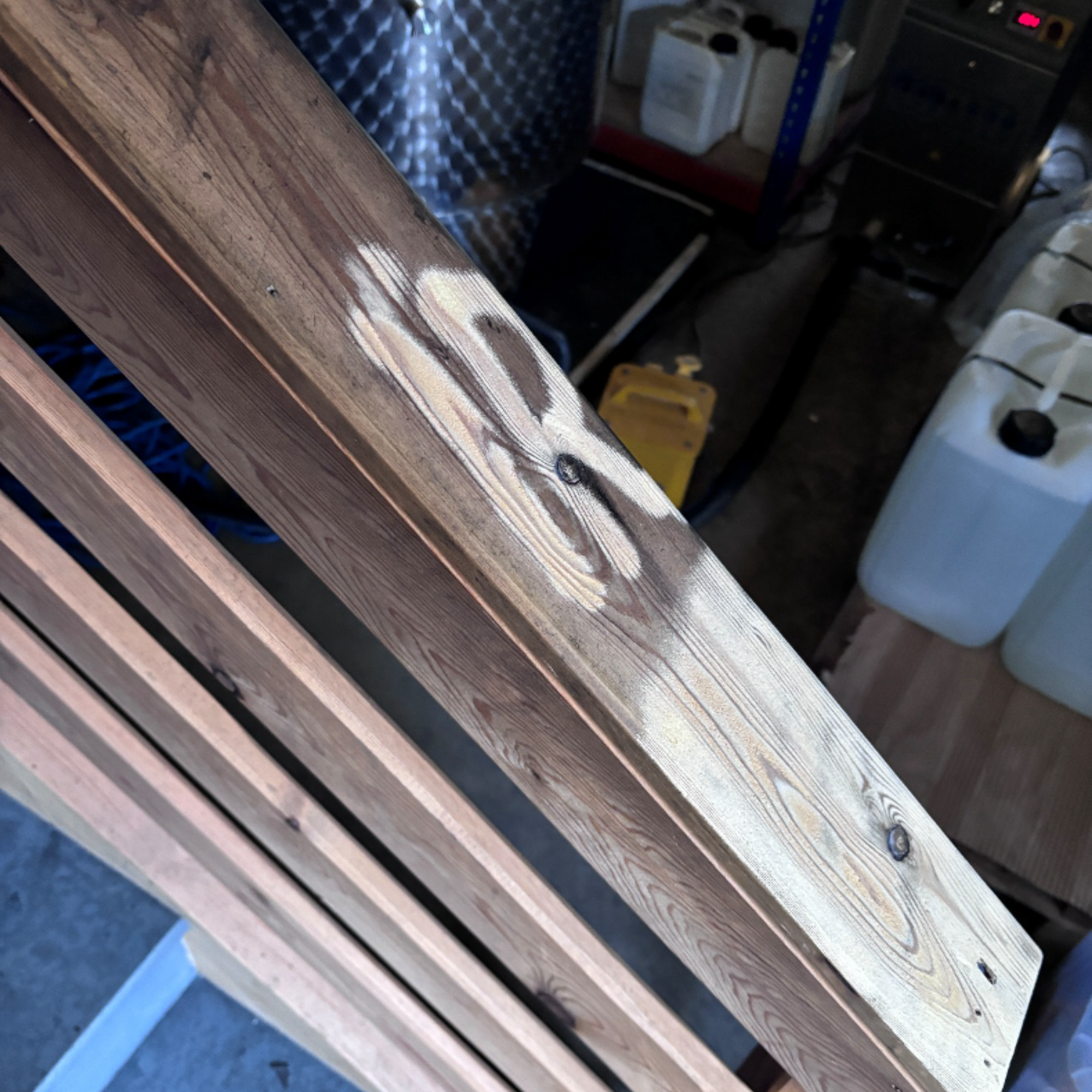
Our team carried out extensive deep cleaning throughout the affected warehouse areas, targeting soot, smoke residues and other surface contaminants across the building’s structural elements.
Due to the height and layout of the premises, mobile elevated work platforms and scaffolding were used to provide safe access to high-level walls, structural framework and roof areas.
All waste generated during the cleaning process was managed and disposed of in accordance with environmental regulations and site requirements.
The Results
The specialist cleaning programme addressed extensive soot and smoke contamination across multiple areas of the warehouse.
By using dry ice blasting, our team was able to target affected structural surfaces and undertake detailed cleaning in areas that would have been difficult to access or treat using conventional methods.
The restoration strategy focused on maximising the recovery of existing building materials, helping to reduce the potential need for extensive strip-out and replacement works.
This project demonstrates the importance of selecting the right restoration technique for large-scale commercial fire damage, particularly where complex structural elements and difficult-to-access areas are involved.
Why Specialist Fire Damage Restoration Matters
Following a commercial fire, replacing every contaminated surface isn’t always necessary.
With the right expertise, equipment and restoration techniques, many structural materials can be professionally cleaned and potentially retained, helping to minimise unnecessary reinstatement costs, waste and disruption.
At Independent Restoration, we assess each project individually to determine the most appropriate cleaning and restoration methods, from traditional soot removal to specialist techniques such as dry ice blasting.
Our priority is always to restore wherever possible.